DIY sugaring or laser hair removal in Germany - which is really safer and better value?
We compare at-home sugaring with a professional laser course in Germany across time, discomfort, ingrown hairs, sensitive areas and true end cost. Includes a simple prep-and-aftercare checklist and guidance on choosing the right laser for your skin tone.
April 4, 2026
Laser Hair Removal
DIY sugaring can be cheap to start, but it takes practice and regular repeat sessions. A professional laser course in a studio usually delivers steadier, longer-lasting reduction with structured safety and fewer ingrowns.
Time and learning curve: hands-on vs scheduled progress
BRIGITTE, a German beauty title, notes that sugaring paste is simple to make from sugar, water and lemon, yet good results take technique and time. Larger areas like legs or trickier spots such as the bikini line can turn into long, unhurried sessions. Expect a learning curve and repeats every few weeks.
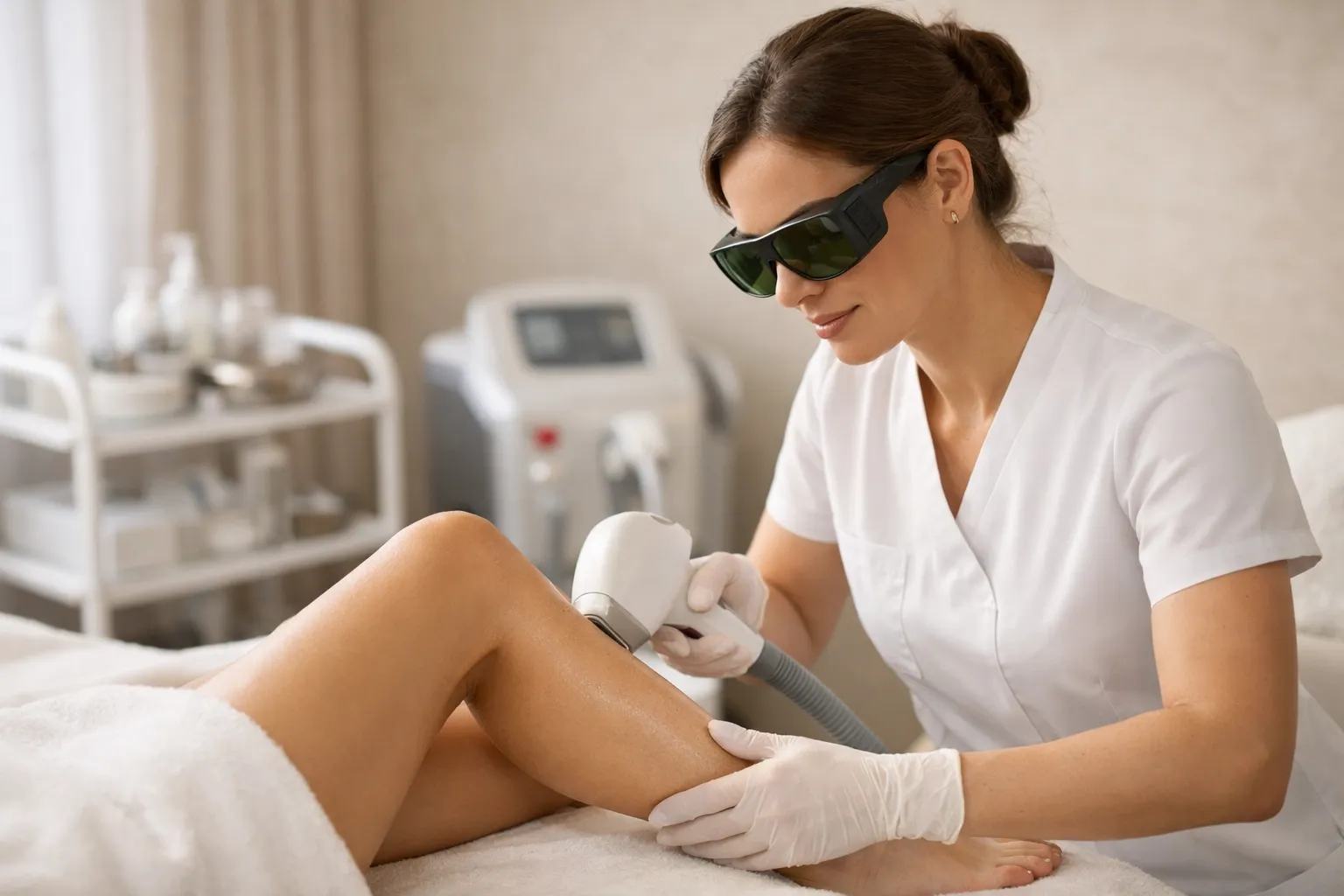
Laser works differently. Each area is typically treated in minutes, then you return across several months so the laser can catch hairs in their growth phase. Studios keep a record of your settings and progress, so results build consistently without DIY trial-and-error.
Comfort and sensitive zones: how it feels in real life
- Sugaring removes hair from the root. The pull can be sharp on underarms, bikini and the upper lip. If paste is too hot or you pull at the wrong angle, you can bruise, snap hairs or irritate the skin.
- Laser feels like quick elastic snaps with cooling. Practitioners adjust energy, add extra cooling and pace the treatment for sensitive areas. A patch test sets comfortable, effective parameters before your course begins.
Ingrown hairs and skin safety
Done well, sugaring can reduce ingrowns compared with shaving. They still occur if hair breaks under the skin or aftercare is skipped. DIY also carries small but real risks: skin lifting, irritation or minor burns from overheated paste.
Laser targets pigment in the follicle, and many clients prone to razor bumps see fewer ingrowns as growth reduces. Safety is structured in a studio: contraindications are screened, eye protection is mandatory, hygiene is medical-grade and tanning guidance is clear. You will be advised about medication interactions and when to pause treatment.
Cost reality in the UK: upfront vs ongoing
- DIY sugaring: Ingredients are inexpensive and accessible. You pay with time and repeat effort every 3 to 5 weeks. Some people still book a professional tidy-up for difficult angles or intimate areas.
- Laser in a studio: The upfront price of a course is higher, but sessions are spaced out, and top-ups tend to be occasional once reduction is achieved. You are also paying for trained staff, calibrated devices and predictable settings.
If you remove hair only a few times a year and enjoy the ritual, DIY can suit you. If you want noticeable reduction and less day-to-day upkeep, laser often becomes the better long-term value.
Quick prep and aftercare checklist
If you are sugaring at home
- Hair length: about 3 to 5 mm so paste can grip.
- Prep: clean, dry skin. Light exfoliation 24 hours before helps.
- Temperature: test paste on your wrist. Aim for warm, not hot.
- Technique: hold skin taut, pull parallel to the skin against growth.
- Aftercare: avoid tight clothing, hot baths and workouts for 24 hours. Moisturise with a simple, fragrance-free lotion. From day 2, exfoliate gently to help prevent ingrowns.
If you are having laser in a studio
- Shave the area 12 to 24 hours before unless advised otherwise.
- Avoid sunbeds, active tans and retinoids/acids on the area pre-treatment.
- Attend your patch test and share any medications or recent skin changes.
- Aftercare: cool the area if warm, skip hot yoga, saunas and acids for 48 hours, use SPF 30+ daily and do not pluck or wax between sessions.
Choosing the right laser for your skin tone
- Fair to medium skin with dark hair: Alexandrite or diode lasers are commonly selected for efficient targeting.
- Medium to deeper tones: Nd:YAG lasers are often preferred as the wavelength bypasses more surface pigment, lowering pigmentation risk.
- Very light blonde, red or grey hair: laser can be less responsive due to low pigment in the hair shaft.
- Always ask for a patch test, clarity on the device used and a plan tailored to your Fitzpatrick type and hair thickness.
Bottom line: if you enjoy hands-on beauty and have the time, sugaring can work with patience. For fewer ingrowns, steady results and clear safety protocols, a professional laser course is usually the safer, more predictable route. For personalised guidance, start with a quick expert check-in 💗 get a consultation.
Experience the ultimate solution for smooth skin
Perfect for both men and women, our safe and effective procedures ensure lasting results. Book your free help today!